AI’s changed how people approach digital image creation. Producing anything detailed — an illustration, a concept image, a visual composition — used to take drawing skills, specialized software, real time. Now text-based image generation lets you describe an idea in ordinary language, get a visual interpretation back. Shows up across creative, educational, marketing, entertainment, personal projects.
What Is AI Image Generation?
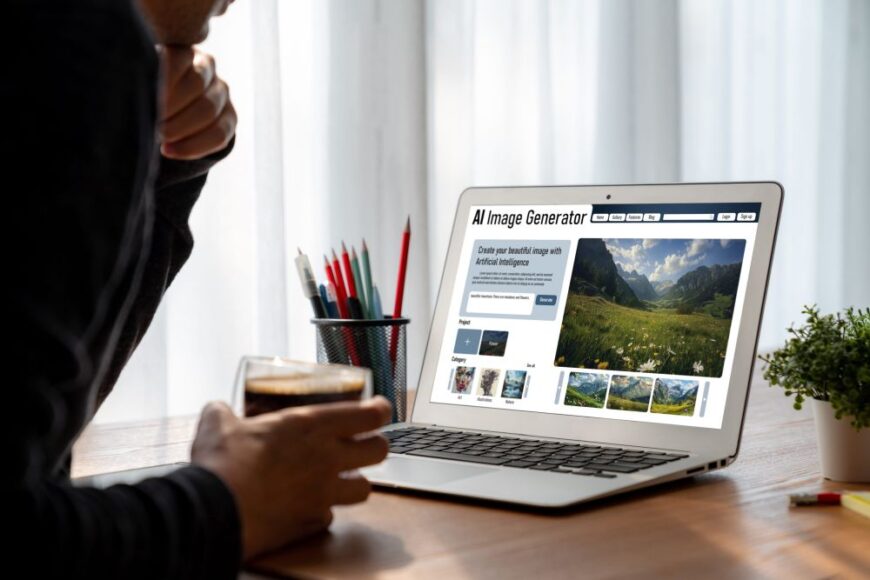
Software creating images from written instructions, commonly called prompts. Describe a landscape, character, object, room, artistic scene — the system reads the language, produces an image reflecting those details.
Modern systems run machine-learning models trained to recognize relationships between visual concepts and language. Not simply searching an existing image library — the model generates new visual content based on the instructions it gets.
Results vary a lot depending on the wording of a prompt, the model being used, how complex the requested scene is. That’s why prompting’s such an important part of the process.
How Text-to-Image Models Work
Complex tech underneath, sure, but breaks into a few stages easy enough. First, the system reads the user’s text, identifies important concepts — subjects, environments, colors, composition, lighting, style.
Model then leans on patterns learned during training to construct an image matching those concepts. Some modern approaches start with visual noise, gradually transform it into something coherent. Other architectures run different generation techniques entirely.
Doesn’t mean the system understands an image exactly the way a human artist would, though. It’s using statistical relationships learned from huge amounts of data to predict what visual elements should appear together.
Writing Better Prompts
How good an AI-generated image turns out often depends on how clearly you described what you wanted. Short prompt can work. Additional useful details give the model more direction, though.
Instead of “a city at night,” describe a modern city skyline after rainfall, illuminated streets, reflections on wet pavement, cinematic nighttime atmosphere.
Useful prompt elements: subject — what should actually appear; environment — where’s the subject located; composition — how should objects be positioned; lighting — bright, dark, natural, dramatic; style — realistic, illustrated, minimalist, painterly; color — particular colors or tones that matter; perspective — close-up, wide shot, overhead view.
More words doesn’t automatically produce better results, though. Clear, relevant descriptions beat long lists of unrelated instructions every time.
AI Art and Creative Experimentation
One of the most interesting applications of an AI art generator rapid experimentation. Artists, designers, writers, students explore multiple visual interpretations of an idea without creating every version by hand.
A writer working on a science-fiction story comes up with several ideas for a future city and then chooses the way the setting is to look. A designer explores visual directions during early brainstorming.
Not necessarily a replacement for traditional creative skills Instead, it becomes an exploratory tool to help people visualize possibilities before they invest more time into a finished design.
Understanding New Image Models
AI image tech keeps evolving as newer models introduce improvements in detail, text rendering, composition, instruction following. Recent developments have also raised the importance of models that interpret complex prompts more accurately.
ChatGPT Images 2.5’s a good example of the broader movement toward more capable AI-based visual generation for anyone exploring newer systems. As image models improve, the line between writing a description and designing an image’s getting less rigid.
Still, remember different models produce different results from the same prompt. A description that works well in one system might need adjustment in another.
Practical Uses of AI-Generated Images
AI-generated visuals support a lot of legitimate creative tasks. Educators create visual examples for lessons. Writers explore characters and fictional environments. Businesses and independent creators use generated imagery for early concepts, presentations, visual planning.
Another prototyping use case. Creators will use AI-generated images to communicate an idea to collaborators before they commission a final illustration or build a physical design. Sometimes a rough visual can do what several paragraphs ever could.
Limitations and Ethical Considerations
Despite rapid improvements, AI image generation has real limits. Models still produce inaccurate details, inconsistent objects, distorted text, unexpected visual elements. Complex scenes involving hands, small written text, or precise technical structures need repeated attempts and human correction.
There’s important questions around training data, copyright, attribution, using recognizable artistic styles too. Different jurisdictions and platforms approach this differently, so understand the rules that apply to your particular project.
Human review still matters, especially when an image’s headed somewhere published, commercial, or presented as factual.
The Future of AI-Assisted Visual Creation
AI image generation’s likely getting more integrated into ordinary creative workflows. Future systems might offer more precise editing, stronger consistency between images, better control over characters and objects, sharper understanding of detailed instructions.
The most useful way to view this tech isn’t as an automatic replacement for artists. It’s a developing creative medium, letting people move from an idea expressed in words toward a visual concept faster.
As this tech matures, effective use will depend not just on what the models can do, but on human judgment, clear communication, originality, and responsibly handling generated content too.