
A $30,000 kitchen renovation might make a house more attractive, but it does not guarantee another $30,000 at resale. A new garage door, fresh paint, or a repaired front entrance could prove more valuable for a fraction of the expense.
The home improvements most worth considering before selling in 2026 are exterior upgrades, selective interior painting, minor kitchen updates, and repairs that remove obvious buyer objections. A major renovation needs stronger justification, particularly when the owner plans to list the property within a few months.
The latest verified national Cost vs. Value figures available for this comparison come from 2025. They provide a useful benchmark for 2026 decisions, but local property prices and contractor quotes should determine the final budget.
Key Takeaways
- Garage door replacement led the 2025 national Cost vs. Value rankings with estimated cost recovery of 268%.
- Half of the Realtors surveyed by NAR recommended painting an entire home before sale.
- Minor kitchen renovations can offer better estimated resale returns than extensive luxury remodels.
- Repairs to damaged surfaces, roofs, and windows may protect a sale without producing a measurable financial profit.
- The most important number is the expected increase in net sale proceeds, not the renovation budget.
Which Home Improvements Offer the Best Return Before Selling?

The 2025 Cost vs. Value Report compared 28 renovation projects across 119 U.S. markets. Five projects achieved estimated national cost recovery above 100%.
| Home improvement | Average project cost | Estimated resale value added | Cost recovered |
|---|---|---|---|
| Garage door replacement | $4,672 | $12,507 | 268% |
| Steel entry door replacement | $2,435 | $5,270 | 216% |
| Manufactured stone veneer | $11,702 | $24,328 | 208% |
| Fiber-cement siding replacement | $21,485 | $24,420 | 114% |
| Minor kitchen remodel | $28,458 | $32,141 | 113% |
Source: 2025 Cost vs. Value Report, national averages.
One detail deserves particular attention. The figures are estimates, not guaranteed profits established through completed home sales.
Zonda’s research combines construction-cost data with estimated resale contributions supplied by more than 6,000 real estate professionals. The report does not directly measure the final sale prices of matched renovated and unrenovated houses.
A garage door with 268% estimated cost recovery therefore does not promise a 168% cash profit for every homeowner.
I would use the rankings to identify projects worth evaluating, not as a reason to replace a perfectly functional feature.
Fresh Paint Can Make More Sense Than an Expensive Remodel

Interior painting rarely receives the attention of a major kitchen renovation. Yet real estate professionals recommend it more often than almost any other pre-sale project.
The National Association of Realtors’ 2025 Remodeling Impact Report found that 50% of surveyed Realtors recommended painting the entire house before sale. Another 41% recommended painting at least one interior room.
The percentages describe agent recommendations, not measured financial returns. No credible national figure guarantees that spending $3,000 on paint will add $6,000 to a property’s sale price.
Still, paint has a practical advantage: it can address visible wear without a complete renovation.
When Is Repainting Worth the Expense?
I would separate the work into three categories before requesting an estimate.
| Existing condition | Recommended action | Reason |
|---|---|---|
| Isolated scuffs or nail holes | Repair and touch up affected areas | A complete repaint may be unnecessary |
| Extensive scuffs, uneven finishes, or heavily personalized colors | Consider repainting the affected rooms | Creates a more consistent appearance |
| Peeling paint, water stains, or damaged drywall | Identify and repair the underlying defect first | Cosmetic paint alone may fail |
The third category is particularly important.
A fresh coat cannot permanently correct moisture damage. The U.S. Environmental Protection Agency advises homeowners to correct moisture problems and clean affected surfaces before paint application.
A contractor should therefore assess visible peeling, soft drywall, recurring stains, and other defects before discussing the finish color.
A Documented Cabinet-Paint Project in Plano, Texas
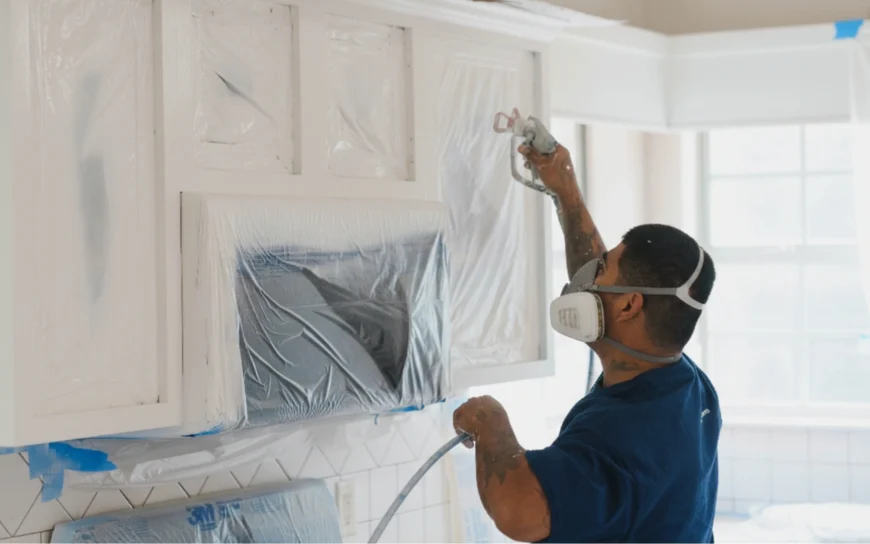
A useful example comes from the published portfolio of Spray Tex Painting.
The company documents a kitchen cabinet refinishing project in Plano, Texas. The work used Sherwin-Williams Evergreen Fog and was completed in three days.
The project illustrates how existing cabinets can receive a noticeably different finish without a complete cabinet replacement.
It does not prove that the work increased the property’s resale price. Spray Tex has not published a verified before-and-after sale valuation for that project.
For homeowners who want to refresh walls, exterior trim, or sound kitchen cabinets, a Plano TX painting company such as Spray Tex Painting can provide a project-specific estimate before the seller commits to more extensive work.
I would compare that estimate with the price of new cabinets or other replacement work. The right choice depends on the condition of the existing materials, not simply their age.
Garage Doors and Front Entrances Offer Strong Estimated Returns
Exterior improvements occupy four of the top five positions in the national Cost vs. Value rankings.
A damaged garage door can dominate the front of a suburban property. A worn entrance can create a poor first impression before buyers enter the house.
Yet replacement is not always necessary.
A garage door with minor surface wear may need repair or repainting rather than a complete new installation. A door with failed panels, serious structural damage, or unreliable operation presents a stronger case for replacement.
The same reasoning applies to the front entrance.
An existing steel door with a sound frame and worn paint may need a cosmetic refresh. A damaged door with severe corrosion or poor operation may justify a replacement.
The financial decision should follow an inspection and written quote.
Dallas Shows Why Local Data Matters
The Cost vs. Value report also provides figures for Dallas, Texas, within its West South Central region.
| Project | Dallas estimated cost | Dallas estimated added value | Dallas cost recovered |
|---|---|---|---|
| Garage door replacement | $4,246 | $11,178 | 263% |
| Steel entry door replacement | $2,268 | $5,713 | 252% |
| Manufactured stone veneer | $10,040 | $24,436 | 243% |
The Dallas figures differ from the national results. They are modeled local estimates, not contractor quotes for a particular house in Plano.
One useful conclusion follows: a national average cannot automatically determine the best improvement in a local neighborhood.
Before authorizing exterior work, I would ask a real estate agent to compare recently sold homes with similar age, size, location, and condition.
A project that fits a $900,000 neighborhood may make little sense for a $300,000 property.
Why Minor Kitchen Updates Often Beat Full Renovations
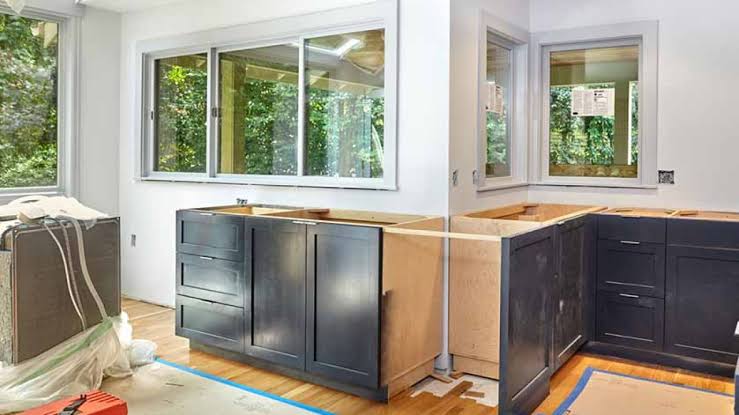
A dated kitchen can affect buyer interest, but replacing everything may be unnecessary.
Suppose a kitchen has solid cabinets, functional appliances, worn handles, and an outdated faucet.
Its main problems are cosmetic. Replacing the entire kitchen would address issues that do not require replacement.
A more selective plan could include:
- Cabinet refinishing where surfaces remain sound.
- New hardware and a replacement faucet.
- Repairs to damaged caulk, grout, or backsplash sections.
- Better illumination above the main work surfaces.
The 2025 national report estimates 113% cost recovery for a defined midrange minor kitchen remodel. That figure should not be assigned to every small cosmetic project.
The report uses standardized project specifications. A $1,200 cabinet refresh and a $28,458 minor kitchen renovation are different scopes of work.
For a home close to its listing date, I would first price the necessary cosmetic repairs. A full renovation deserves consideration only when the expected sale-price difference supports its cost.
Roofs and Windows Can Protect a Sale Without Producing a Profit
A damaged roof or a leaking window creates a different financial question.
The homeowner may need to repair the defect to keep the property marketable or address a buyer’s inspection concerns.
That does not mean every roof or window replacement will produce a positive return.
Consider two houses.
The first has a functional roof with minor cosmetic wear. The second has active leaks, damaged decking, and visible interior stains.
The case for major roof work is substantially stronger in the second property.
Windows require the same distinction. Failed seals, water intrusion, or damaged frames may justify replacement. Minor surface wear may not.
The U.S. Department of Energy recommends home energy assessments to identify sources of energy waste and prioritize improvements.
An assessment can help owners avoid unnecessary equipment replacement. However, estimated utility savings and added resale value remain separate financial benefits.
Foreign Policy’s article on choosing a replacement window contractor also explains why written quotes, proper installation, and contractor credentials matter.
What Can a $10,000 Pre-Sale Budget Actually Accomplish?
A seller with $10,000 available may feel pressure to spend the entire amount on one visible renovation.
I would take a different approach for a house with no major structural defects.
Consider the following hypothetical budget:
| Improvement | Illustrative budget |
|---|---|
| Interior paint and drywall repairs | $2,800 |
| Exterior trim and entrance refresh | $1,200 |
| Minor kitchen improvements | $1,400 |
| Bathroom repairs | $900 |
| Landscaping and exterior cleanup | $700 |
| Reserve for unexpected repairs | $3,000 |
| Total | $10,000 |
The amounts are illustrative allocations, not contractor estimates or verified national averages.
The reserve accounts for an important possibility: a seller may discover an essential repair after the cosmetic work begins.
Without available cash, even a relatively modest defect can force the owner to delay the listing or accept unfavorable terms.
The budget also assumes that the roof, foundation, HVAC system, and other major components are in serviceable condition.
If a serious defect exists, it should take priority over decorative work.
Foreign Policy’s article on ways to sell a home faster makes a related point about minor repairs and presentation. Buyers can notice small defects even when the home’s main features remain attractive.
Which Renovations Would I Avoid Before a Sale?

Several projects offer substantial personal enjoyment but a weaker financial case for immediate resale.
A luxury kitchen, custom home theater, elaborate outdoor kitchen, or highly personalized bathroom may appeal to the present owner more than the eventual buyer.
The central risk is over-improvement.
A homeowner may install materials and features that exceed neighborhood expectations. The final sale price may remain constrained by comparable properties nearby.
I would also question major room additions when the listing date is close. Planning, permits, construction delays, and unexpected costs can eliminate much of the potential benefit.
Smaller cosmetic work can be a safer option when the existing structure is sound.
Foreign Policy has additional DIY home improvement ideas that may suit homeowners who want a limited refresh rather than a major renovation.
DIY work still needs appropriate skill. Electrical alterations, structural modifications, and significant plumbing repairs should not become last-minute experiments before a sale.
A Simple Financial Test Before You Approve Any Renovation
One calculation can prevent an expensive mistake.
Imagine a homeowner who expects to sell a house for $400,000 in its current condition.
A contractor offers a $15,000 renovation. A local agent estimates that the improved house could sell for $412,000.
The projected financial difference is:
| Item | Amount |
|---|---|
| Expected sale price before renovation | $400,000 |
| Expected sale price after renovation | $412,000 |
| Potential additional sale revenue | $12,000 |
| Renovation expense | $15,000 |
| Projected difference | −$3,000 |
The homeowner would spend $15,000 to seek another $12,000 in sale revenue.
That produces a projected $3,000 shortfall before possible changes to commissions, transaction costs, taxes, or the sale timeline.
The example is hypothetical. It does not reflect a documented transaction.
A renovation could still make sense if it prevents a larger price reduction or removes a major obstacle to the sale. Those benefits need evidence, not assumptions.
Before approval, I would request three things: a written contractor quote, a local comparative market analysis, and a realistic completion schedule.
If the estimated additional sale proceeds do not exceed the total project cost, I would reconsider the work.
What Should Homeowners Prioritize in 2026?
The strongest pre-sale strategy is usually selective.
Start with defects that threaten the sale. Assess worn paint, damaged surfaces, and obvious exterior problems. Consider a garage door, entrance, or minor kitchen improvement only when the property’s condition justifies the expense.
Large renovations need a clear financial case. National cost-recovery rankings can help identify promising projects, but they cannot predict a specific transaction.
I would make the final decision after comparing local sale prices with actual contractor estimates.
The best improvement is not necessarily the one that creates the most dramatic transformation. It is the one that leaves the homeowner with more money after the property sells.